
Welcome
Asset Allocation
It’s not fashy, it rarely shows up in headlines, and hotshot investors loath to admit it, but asset allocation (your big-picture mix of assets) drives the overwhelming majority of your long-term returns. Not which stocks or bonds, but simply stocks OR bonds—or cash for that matter.
And the classic 60/40 Balanced Portfolio (60% stocks and 40% bonds) is the benchmark starting point for a lot of investors.
It’s critically important to understand how your investments fit into your long-term asset allocation, and whether they align with your personal goals.
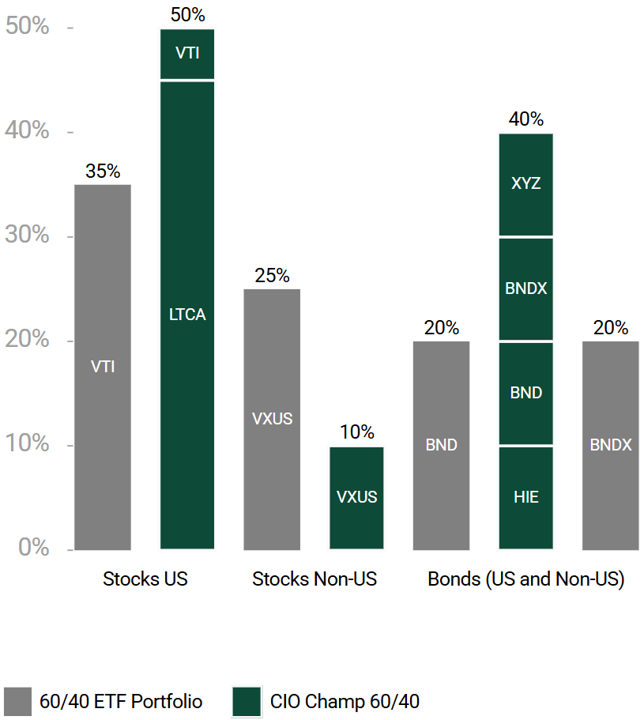
For example, Vanguard—one of the largest passive investors in the world—uses the same 4 strategies (basically ETF tickers VTI, VXUS, BND and BNDX) to set a basic balanced asset allocation for many investors. And that’s a good benchmark starting point for you to adjust your own allocations up (more stocks) or down (more bonds), including your own preference for which types of stocks (and which individual stocks) you want to own.
The Balanced 60/40 Portfolio
Asset Allocation Decisions
Of course stocks and bonds, both US and international, have performed dramatically differently over time, as you can see in the following graphic. Keep this in mind when you set your own individual asset mix.
Broad Market Annualized Returns:
Vanguard Target Date Fund Components
And within asset classes, such as US equities, the 11 major GICS sectors can deliver divergent performance. It can be important to monitor your sector exposures for risk management purposes and to identify opportunities.
Donec id justo non metus auctor commodo ut quis enim. Mauris fringilla dolor vel condimentum imperdiet.